Human beings don’t always make the most rational decisions, especially in times of stress.
Remember when COVID first hit our shores?
Suddenly, people were scrambling to buy and hoard as much toilet paper as they could.
Supermarket shelves were bare.
Fights broke out in the aisles.
One Victorian supermarket sold three months’ worth of toilet paper in just one week.

Source: https://collections.museumsvictoria.com.au/articles/16896
It’s easy to panic when everyone else is
This is especially true when it comes to high pressure situations, such as unfolding health events, and stock market falls.
There’s even a tracker that reports on stock market sentiment.
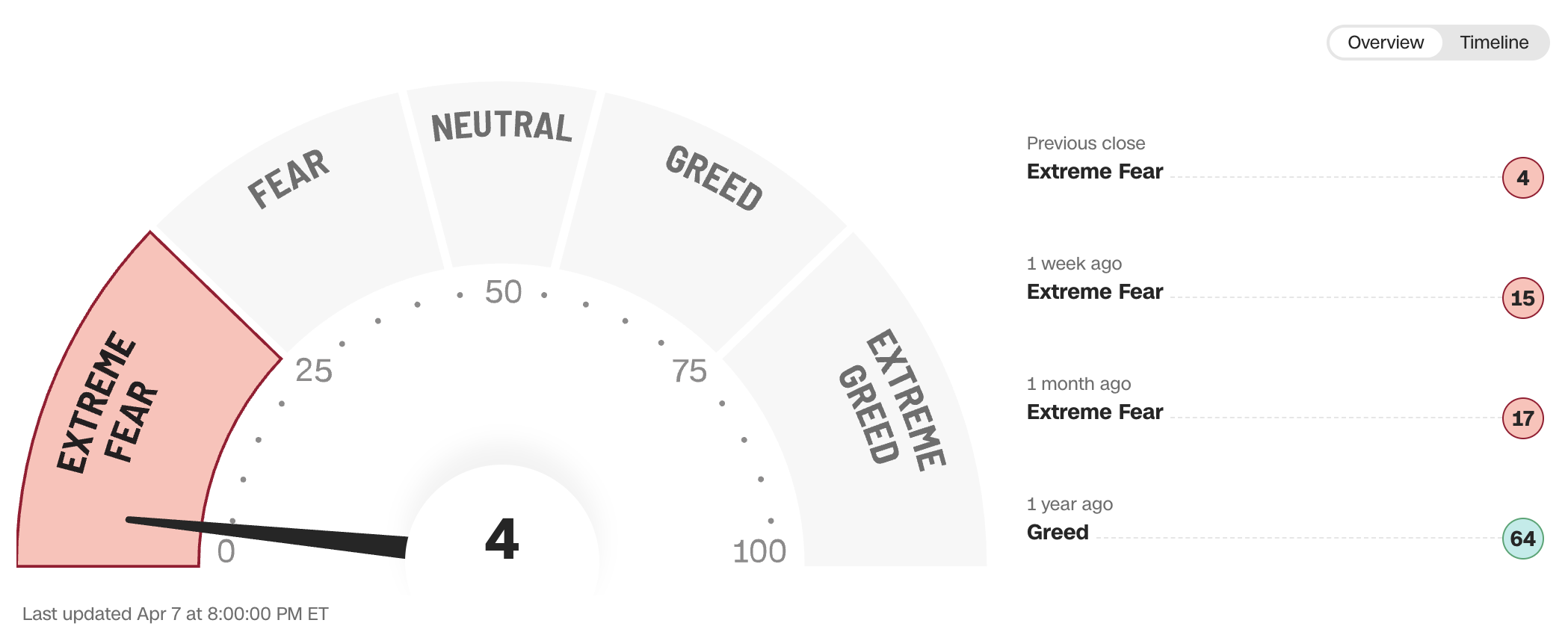
If investors are overly scared, or overly confident, about market conditions, chances are they’re panic selling or catching FOMO.
Sometimes the Fear Index reports Extreme Fear. Markets hate uncertainty, and it can make things seem pretty shaky.
You can check out the Fear and Greed Index for yourself.
Here's what we know
At Spaceship we know that one of the hardest parts of being a long-term investor is stomaching market volatility.
And while we share info about how the pros handle market falls, and what long-term investors should do during market downturns, we know that knowing what to do, and actually doing it, are two different skills.
The only thing certain when it comes to investing is that markets go up and down.
So we asked some of our Spaceship team who have long-term investment horizons to share how they handle market swings, no matter what they’re invested in.
"How I handle market swings"

"I look at long-term graphs."
"Markets have forever gone up and down."
"When I look more long-term, it reminds me it’s just a blip in the scheme of things,” said a Fund Operations Manager.

"I still cling on to the sale analogy."
"I’ve bought something full-price and now it's on sale. It sucks but it's time to go shopping for other things on my wishlist."
"I’m not looking at what I have (which has been discounted) but opportunities I can buy on sale,” said a VP of Investments.

"For me, market volatility presents risks but it’s also an investment opportunity."
"I always leave some liquidity/cash in my portfolio to grab the chance to average the cost (or buy the dip)."
"I think consistency is key,” said a Fund Accounting Manager.

“I love buying new things when the market is cheap..."
"It’s like Boxing Day Sales but for the market,” said a Risk and Compliance Manager.

“I actively avoid watching too closely and focus on a dollar-cost averaging approach."
"It helps remove the emotions from it,” said a Customer Service Lead.

“I think about times when my portfolio has been negative before, and how it’s recovered."
"That helps me to stay the course,” said a Content Marketing Lead.

“I think of it as stocks going on sale!"
"Everything must go!” said a Customer Success Advocate.
We all have different approaches to investing, because we’re all different people. Our goals, time horizons, levels of risk tolerance, and personal finance situations are unique to us.
But we find it helps to remember, during global market swings, that we’re in it together.