January 2025 was a big month for the global economy.
Closer to home, some of the Spaceship Voyager portfolios reached all time highs.
And within those portfolios, we had some companies reach highs, while other companies took breathers.
Let’s take a quick look.

What happened around Australia? 🇦🇺
In January 2025, heatwaves, fires, and flash floods swept across Australia; inflation dropped enough to raise hopes for an interest rate cut; Neale Daniher AO was named Australian of the year; the Australian women’s cricket team won the Ashes; Centrelink payments increased for some; and a new travel authorisation was introduced for Aussies wanting to visit the United Kingdom.
What happened in the market? 🏛️
Two of the biggest stories were the sudden arrival of a new AI, and the predicted beginning of a trade war.
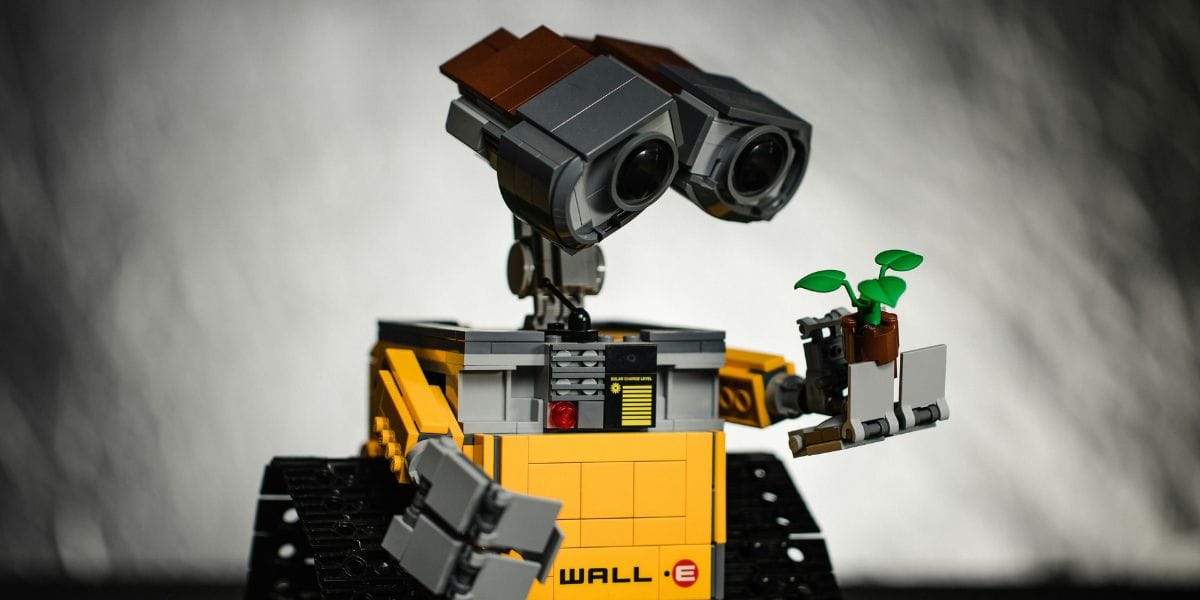
Battle of the robots: DeepSeek vs ChatGPT 🤖
DeepSeek is an AI model that works just like ChatGPT but there’s a catch: the team behind it say they trained it for $6 million which is much, much less than the $100 million+ OpenAI reportedly spent training ChatGPT.
The semiconductor industry was shook: the market’s been working on the assumption that AI needs faster, stronger, and more expensive chips to keep progressing. If DeepSeek has proved them wrong, that means it could cost investors a lot of money.
NVIDIA felt this the most strongly because it’s the main provider of sophisticated chips, and arguably the biggest name in AI. If there’s less demand for their chips, they won’t make as much money as investors first thought, so their stock may not be worth as much.
There’ve been conflicting reports though: one research house proposed that it actually cost DeepSeek more than $500 million to train their model, and they used more than $1.6 billion worth of hardware investments to do so.
Either way, it’s challenged the hegemony that ChatGPT, Claude, and Gemini have been able to sustain and attract investment from.
Our view is that democratisation of AI is a good thing particularly in lowering costs for software providers. Reduced costs drive greater adoption and usage which in turn should keep demand for chips robust.

Trade wars start 🇺🇸🇨🇦🇲🇽🇨🇳
The point of a free market is that the price of goods should be decided by the market forces of supply and demand.
So when governments start to meddle, it can have far reaching impacts.
That’s what’s been happening in the US in January, with President Trump taking and threatening blunt actions that have impacted the global markets and specifically, some of the Spaceship Voyager portfolio companies.
The biggest headlines were made when he announced new tariffs on Canada, Mexico, and China.
A tariff is an import tax that works to increase the price of goods from specific countries. Tariffs can be applied to specific product types, industries, and countries.
Essentially, Trump’s tariffs would make products imported from Canada, Mexico, and China more expensive for US businesses and consumers. This has a wider impact of reducing demand – when the price of something goes up, people tend to buy less of that thing. Tariffs can have billion dollar impacts across industries.
Canada, Mexico, and China didn’t take this lying down, and announced their own tariffs on American goods in return.
At the time of writing, Trump’s called a moratorium on the Canadian and Mexican tariffs, but the market’s already been spooked. Markets prefer certainty, and tariff threats have caused consumers and investors alike to freak out a little, and you can see it reflected in stock charts.
Our investment approach is to view tariffs as negotiation tools, with policies and implementation likely to evolve. As a result we are unlikely to make any portfolio adjustments in regards to tariff concerns and continue to focus on investing in Where the World is Going trends.
What happened in the Spaceship Universe and Spaceship Earth portfolios?
Let’s look at the biggest moves in the Spaceship Voyager Where the World is Going (WWG) portfolios, the Spaceship Universe and Spaceship Earth portfolios.

Moving up 📈
Cloudflare
(Returned +27.62% for the Spaceship Universe and Spaceship Earth portfolios in January, from 1-31 January 2025, converted in Australian dollars and not annualised.)
Cloudflare’s systems detected and blocked the largest DDoS attack ever reported in October 2024. They also integrated DeepSeek as an AI provider for their gateway systems for customers on January the 2nd, nearly a month before news of its low costs shook global stock markets.
They reported this and more in their 20th edition of the Cloudflare DDoS Threat report.
Other highlights included that they blocked 53% more DDoS attacks in 2024 than they did in 2023, at an average of 4,870 DDoS attacks every hour.
They also noted that Internet of Things devices including smart TVs and set-top boxes are being exploited in cyberattacks.
You can read more at the Cloudflare blog.
NU Holdings
(Returned +26.90% for the Spaceship Universe portfolio in January, from 1-31 January 2025, converted in Australian dollars and not annualised.)
Late last year, NU announced that its Brazil business had surpassed 100 million customers, becoming the first digital banking platform outside of Asia to reach this milestone and the largest bank in Brazil by customer count.
The word is out that the largest digital banking platform outside of Asia is considering moving its legal base to the UK, and expanding into the US. Both moves would set the company up for global expansion.
What's spurring the move? NU Bank has a crypto arm, and with President Trump perceived to be crypto-friendly, NU CEO David Velez has told Reuters, “When an administration suddenly sees fintech as being good for consumers and more competition, that makes it more attractive."
Starbucks
(Returned +17.17% for the Spaceship Universe and Spaceship Earth portfolios in January, from 1-31 January 2025, converted in Australian dollars and not annualised.)
While global transactions are still down at Starbucks, the trend is improving, according to the company’s fiscal first quarter report. Several improvements are planned for the remainder of the year, including reducing the number of items on Starbucks' menu, implementing a new algorithm for managing mobile orders, and adding digital menu boards in stores.
Its new CEO, Brian Niccol, has had the gig since September 2024. He came from Chipotle, so investors have confidence he can turn things around for Starbucks, like he did at Chipotle, which is kind of America’s answer to GYG.
Meta
(Returned +16.88% for the Spaceship Universe and Spaceship Earth portfolios in January, from 1-31 January 2025, converted in Australian dollars and not annualised.)
First, Meta announced plans to lay off 5% of its lowest performers, and the market, which can be heartless, reacted positively.
It also announced changes perceived to be targeted at winning favour with the new US administration, such as adding UFC boss Dana White to its board.
On 29 January, the company announced Q4 and 2024 full year earnings, and highlights included that it’s selling more ads, making more money from them, and increasing the number of people who use its family of apps every day.
Snowflake
(Returned +16.72% for the Spaceship Universe and Spaceship Earth portfolios)
Snowflake makes it easier for companies to organise and understand their data.
And if AI ends up being cheaper than first expected, as in the case of DeepSeek, it could mean a massive increase in Snowflake’s prospective customer base and thus, demand for its services. That’s what the market’s hoping, and buying into.
Moving down 📉
Nuix
(Returned -28.96% for the Spaceship Universe Portfolio in January, from 1-31 January 2025, converted in Australian dollars and not annualised.)
Nuix told its investors they should lower their expectations for its half-yearly results on 24 February, as the company will be reporting lower than expected earnings as some pipeline deals moved from anticipated completion from the first half to second half of the year
It’s also a company with exposure to AI, as Nuix offers its own models that help make results explainable and defensible for users. The lower prices, driven by DeepSeek, also contributed to the decline.
Kogan
(Returned -23.19% for the Spaceship Universe Portfolio in January, from 1-31 January 2025, converted in Australian dollars and not annualised.)
A similar thing happened to Kogan. Its January business update reported tech difficulties had caused a key project – the upgrade of Mighty Ape, which is an entertainment and pop culture store –, to lose sales during the peak shopping sales period, and it will have a meaningful impact on the company’s bottom line.
Zip
(Returned -17.57% for the Spaceship Universe Portfolio, in January, from 1-31 January 2025, converted in Australian dollars and not annualised.)
Zip announced quarterly results and while they’re still growing, their margins have declined, which means they’re making a tiny bit less profit on each sale, and that adds up. The market pays attention to the details, so even though sales and revenue might be up, as in Zip’s case, they don’t get full marks across the board.
NVIDIA
(Returned -11.22% for the Spaceship Universe and Spaceship Earth portfolios in January, from 1-31 January 2025, converted in Australian dollars and not annualised.)
NVIDIA copped it when DeepSeek released its newest model and it caused the market to second-guess the need for NVIDIA’s continual chip updates. Its next earnings update will be on 26 February.
Enphase Energy
(Returned -9.96% for the Spaceship Universe and Spaceship Earth portfolios in January, from 1-31 January 2025, converted in Australian dollars and not annualised.)
Enphase has a few things to contend with: increased tariffs could increase its cost of business, while pushing up inflation overall. Higher interest rates, which can be caused by inflation, impact solar adoption as it’s expensive and people tend to need loans for it. Enphase is also at the mercy of any anti-environmental policies President Trump might introduce.
The bottom line
Overall, it’s been a busy month. And as we like to remind our community, Spaceship Voyager portfolio investments are long-haul flights, and turbulence comes with the territory!
Some of our Spaceship Voyager portfolios invest in Cloudflare, Nu Holdings, Starbucks, Meta, Snowflake, Nuix, Kogan, Zip, NVIDIA, and Enphase Energy at the time of writing.
Important! We're sharing with you our thoughts on the companies in which Spaceship Voyager invests for your informational purposes only. We think it's important (and interesting!) to let you know what's happening with Spaceship Voyager's investments. However, we are not making recommendations to buy or sell holdings in a specific company. Past performance isn't a reliable indicator or guarantee of future performance.